Best Credit Cards: Your Comprehensive Guide to Unlocking Financial Freedom and Rewards
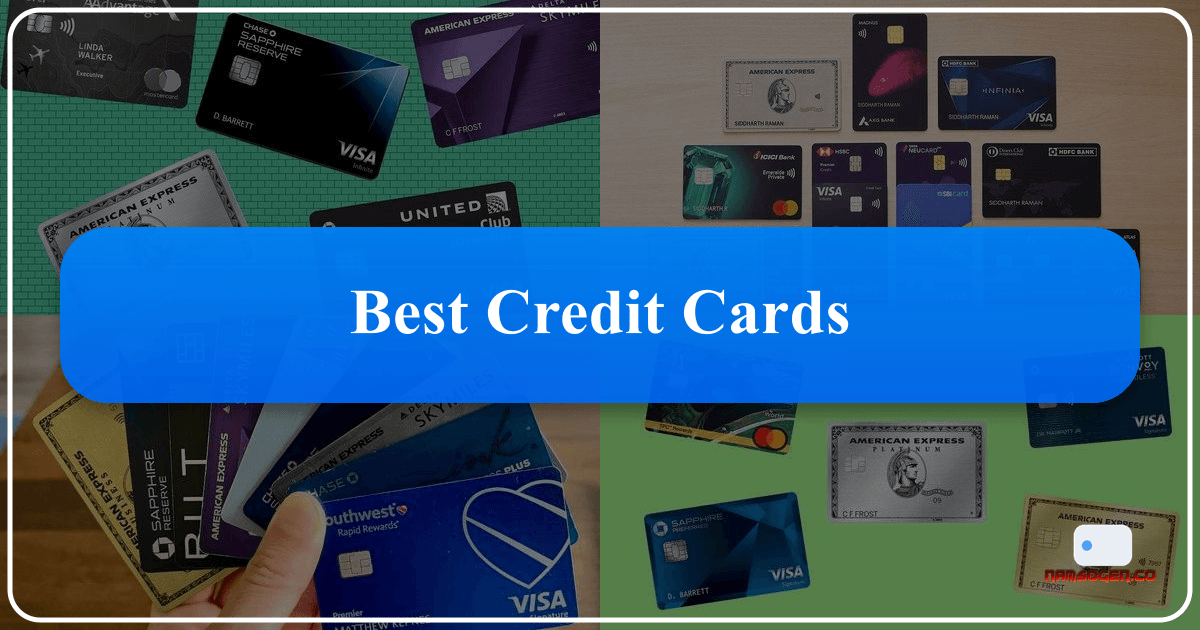
Best Credit Cards
In today's dynamic financial landscape, credit cards are far more than just tools for making purchases; they are powerful instruments that, when wielded wisely, can open doors to significant rewards, build a strong credit profile, and offer unparalleled convenience and security. From everyday spending to international travel, the right credit card can enhance your financial life, providing benefits ranging from robust cashback to exclusive travel perks. However, with an overwhelming array of options available—each boasting unique features, reward structures, and fee schedules—navigating the market to find the "best" credit card can seem daunting.
This comprehensive guide from Namsogen.co is designed to demystify the world of credit cards, helping you understand the various types, explore the myriad of rewards and benefits, grasp key financial considerations, and ultimately, select the card that perfectly aligns with your financial goals and lifestyle. Whether you're a beginner seeking to establish credit, a savvy spender looking to maximize rewards, or a frequent traveler in pursuit of premium perks, we'll equip you with the knowledge to make an informed decision.
Understanding Different Types of Credit Cards and Their Core Offerings
The first step in choosing the best credit card is to understand the diverse categories available and what each is primarily designed for. For general recommendations, see our guide on Good Credit Cards. Credit card issuers such as Visa, Mastercard, American Express (Amex), and Discover offer a wide spectrum of products, each tailored to different consumer needs and spending habits.
Learn more about the American Card and its unique benefits.
Rewards-Focused Cards: Maximizing Every Purchase
For many, the primary allure of a credit card lies in its ability to offer tangible rewards for spending. These cards are designed to give you something back on every dollar you spend, making them highly popular among consumers who pay their balances in full each month to avoid interest.
- Cashback Credit Cards: These cards are straightforward and popular for their simplicity. They offer a percentage of your spending back as cash, typically deposited into your bank account, applied as a statement credit, or used for gift cards. Some cashback cards offer a flat rate (e.g., 1.5% or 2% on all purchases), while others provide higher rates (e.g., 3-5%) on specific categories that rotate quarterly (e.g., groceries, gas, online shopping) or are fixed for certain spending types. They are ideal for those who prefer simplicity and direct savings without worrying about points or miles conversions.
- Travel Rewards Credit Cards: Geared towards adventurers and globetrotters, these cards allow you to earn points or miles that can be redeemed for flights, hotel stays, rental cars, or other travel-related expenses. The value of these points can often be higher than cashback, especially when redeemed strategically. Many travel cards offer flexible points programs (like Chase Ultimate Rewards or American Express Membership Rewards) that can be transferred to various airline and hotel loyalty partners, providing immense flexibility and potentially outsized value. Co-branded airline and hotel cards, such as Delta SkyMiles, Hilton Honors, Marriott Bonvoy, or specific airline cards, directly accrue miles or points within those loyalty programs, often coming with brand-specific perks.
- Airline Miles Credit Cards: A subset of travel rewards, these cards directly earn miles with a specific airline. They are excellent for those with strong loyalty to a particular carrier. Beyond earning miles, they frequently offer benefits like free checked bags, priority boarding, discounted in-flight purchases, and even elite status qualification boosts, significantly enhancing the travel experience.
- Sign-Up Bonuses and Welcome Offers: A crucial component of rewards cards are their initial incentives. Most top-tier rewards cards offer substantial sign-up bonuses (e.g., 50,000 to 100,000 points or hundreds of dollars in cashback) for meeting a specified spending threshold within the first few months of account opening. These welcome offers represent a significant boost to your rewards balance and are often a primary driver for choosing a particular card. Namsogen.co frequently highlights the best current sign-up bonuses to help readers maximize their initial earnings.
Cards for Specific Needs: Tailored Solutions
Beyond general rewards, the credit card market caters to a multitude of specialized needs, ensuring there's a card for almost every financial situation.
- Student Credit Cards: Designed for college students, these cards help young adults build credit history responsibly. They often feature lower credit limits, simple reward structures (e.g., modest cashback), and educational resources on managing credit. Approval requirements are typically more lenient, acknowledging that students may have limited or no credit history.
- Business Credit Cards: For entrepreneurs and small business owners, business credit cards offer distinct advantages, including separate spending for business expenses, higher credit limits, and specialized rewards categories (e.g., office supplies, internet services, advertising). They also simplify expense tracking and can come with perks tailored for business travel or operational needs.
- Secured Credit Cards: For individuals with poor credit or no credit history, secured credit cards are an excellent starting point. They require a cash deposit that typically acts as your credit limit, reducing risk for the issuer. By using the card responsibly and making on-time payments, you can gradually build or rebuild your credit score, eventually qualifying for unsecured cards.
- Balance Transfer Credit Cards: These cards are designed to help consumers manage high-interest debt by allowing them to transfer balances from existing credit cards to a new card, often with a promotional 0% APR period for 12-21 months. This allows you to pay down debt more efficiently by focusing on the principal, saving significant money on interest charges. However, balance transfer fees (typically 3-5%) usually apply.
- 0% APR Credit Cards: Similar to balance transfer cards, many new credit cards offer an introductory 0% APR on new purchases for a limited time. This can be extremely beneficial for financing a large purchase without incurring interest, provided you pay off the balance before the promotional period ends.
Premium & Luxury Cards: The Elite Experience
At the top end of the spectrum are premium and luxury credit cards, often characterized by high annual fees but offering an unparalleled suite of benefits designed for high-net-worth individuals and frequent travelers. Cards like the Chase Sapphire Reserve, Amex Platinum Card, or Capital One Venture X fall into this category. If you’re considering the Chase Sapphire lineup, read about the Annual Fee for Chase Sapphire Preferred to better understand its value and how it compares to higher-tier options. They provide perks such as:
- Lounge Access: Complimentary access to airport lounges (e.g., Priority Pass, Centurion Lounges, Delta Sky Clubs) offering a comfortable escape from busy terminals.
- Travel Credits: Annual credits for airline fees, hotel stays, or general travel expenses that can offset a significant portion of the annual fee.
- Enhanced Travel Insurance: Robust travel insurance, trip cancellation/interruption protection, and primary car rental insurance.
- Hotel Status & Benefits: Automatic elite status with hotel chains, offering upgrades, late checkout, and complimentary breakfast.
- Concierge Services: Dedicated assistance for booking travel, dining reservations, and event tickets.
- Global Entry/TSA PreCheck Credits: Reimbursement for application fees.
While the annual fees can be steep (e.g., $400-$700+), the value of the combined benefits often far exceeds the cost for those who utilize them fully.
Maximizing Your Rewards and Benefits: A Strategic Approach

Maximizing Your Rewards and Benefits.
Getting a rewards card is just the first step; truly maximizing its potential requires a strategic understanding of its programs and perks.
Demystifying Rewards Programs: Points, Miles, and Cashback
Each rewards program operates differently. It's crucial to understand:
- Redemption Value: Not all points or miles are created equal. Some points are fixed in value (e.g., 1 cent per point), while others, especially transferable points programs, can yield much higher value when transferred to airline or hotel partners for premium travel. Namsogen.co offers detailed guides on optimizing redemption for various programs.
- Bonus Categories: Pay attention to categories that earn accelerated rewards (e.g., 3x points on dining, 5% cashback on gas). Align your spending with these categories to earn rewards faster.
- Earning Potential: Calculate your typical monthly or annual spending to estimate how many rewards you can realistically earn. This helps in comparing the long-term value of different cards.
Unlocking Welcome Offers and Sign-Up Bonuses
These initial bonuses are often the most valuable part of a new credit card. To make the most of them:
- Meet Spending Requirements: Carefully track your spending to ensure you meet the minimum spending threshold within the specified timeframe. Never overspend just to hit a bonus; only put purchases you would naturally make on the card.
- Timing Your Applications: Consider applying for cards when you anticipate larger expenses (e.g., holiday shopping, home renovations, flight bookings) to easily meet the bonus requirements.
- "Churning" (with caution): Some experienced users strategically open and close cards to repeatedly earn sign-up bonuses, a practice known as "churning." However, this requires careful credit management and awareness of issuer rules (e.g., Amex "once per lifetime" rule, Chase 5/24 rule) and can negatively impact your credit score if not handled responsibly. Namsogen.co provides insights into these advanced strategies for informed readers.
Leveraging Travel Perks for Enhanced Experiences
Travel and perks are where premium cards truly shine. Beyond lounge access, consider:
- Travel Insurance and Trip Protection: Many cards offer robust travel insurance, including coverage for trip cancellation/interruption, baggage delay/loss, and travel accident insurance. This can save you hundreds of dollars by eliminating the need to purchase separate policies.
- Rental Car Insurance: Many premium cards offer primary (or secondary) collision damage waiver coverage, potentially saving you from purchasing expensive insurance from rental agencies.
- Companion Pass/Free Night Certificates: Co-branded airline and hotel cards often provide annual companion passes or free night certificates upon renewal, offering significant value.
- Upgrades and Status: Some cards automatically grant you elite status with hotel chains, leading to room upgrades, complimentary breakfast, and other VIP treatments.
Key Financial Considerations and Smart Usage
While rewards are enticing, the core of responsible credit card usage lies in understanding the financial mechanics and maintaining sound financial habits. You can also explore the Advantages of Credit Card to gain deeper insight into how these tools can enhance your financial flexibility and long-term benefits.
Navigating APR, Interest Rates, and Annual Fees
- Annual Percentage Rate (APR) / Interest Rate: This is the cost of borrowing money if you don't pay your balance in full each month. APRs can vary widely, from single digits for excellent credit to over 25% for subprime cards. Always aim to pay your statement balance in full to avoid interest charges, making the APR largely irrelevant for responsible users.
- Annual Fees: Some of the best rewards and premium cards come with annual fees, ranging from $50 to over $700. Before committing to a card with an annual fee, objectively evaluate whether the benefits and rewards you'll receive outweigh the cost. Many cards offer enough value through credits or perks to easily offset the fee. For instance, a card with a $95 annual fee might offer a $100 annual travel credit, effectively making the card "free" if you use the credit.
- Other Fees: Be aware of potential fees like late payment fees, foreign transaction fees (which can be 2-3% of every international purchase), cash advance fees, and balance transfer fees. Many travel cards waive foreign transaction fees, making them ideal for international use.
Understanding Your Credit Score and Its Impact
Your credit score is a numerical representation of your creditworthiness, primarily influenced by:
- Payment History: Making on-time payments is the single most important factor.
- Credit Utilization: The amount of credit you're using compared to your total available credit. Keeping this ratio below 30% (ideally below 10%) is crucial.
- Length of Credit History: Longer histories generally equate to better scores.
- Credit Mix: Having a variety of credit types (e.g., credit cards, auto loans, mortgages) can be positive.
- New Credit: Too many recent applications can temporarily lower your score.
A good credit score (typically 700+) is essential for qualifying for the best credit cards with the most attractive rewards and lowest APRs. Regularly checking your credit score and report (available for free annually from major credit bureaus) is a smart financial habit. Namsogen.co offers resources to understand and improve your credit score.
Balance Transfers and Debt Management
If you carry high-interest credit card debt, a balance transfer card can be a lifeline. By consolidating debt onto a card with a 0% introductory APR, you gain a period to pay down the principal without accruing additional interest. This strategy requires discipline: focus on paying off the transferred balance before the promotional period expires, and avoid making new purchases on that card that could incur interest. Always calculate the balance transfer fee to ensure the savings outweigh the cost.
Security, Payments, and Advanced Features
Modern credit cards integrate advanced technology to ensure secure and convenient transactions.
Protecting Your Transactions: Fraud Protection and EMV Chip
- Fraud Protection: All major credit card networks (Visa, Mastercard, Amex, Discover) offer robust fraud protection, often with zero liability policies. This means you won't be held responsible for unauthorized charges, provided you report them promptly.
- EMV Chip Technology: The small metallic chip on your card provides enhanced security by encrypting transaction data, making it much harder for fraudsters to clone your card. Always "dip" your card into a chip reader when available, rather than swiping.
- Contactless Payment: Many cards now support contactless payments (NFC), allowing you to simply tap your card or mobile device at compatible terminals. This method is often more secure than swiping as it also uses encrypted data.
Digital Wallets and Mobile Payments

Digital Wallets and Mobile Payments.
Mobile wallets like Apple Pay, Google Pay, and Samsung Pay allow you to securely store your credit card information on your smartphone or smartwatch. When making a purchase, these services use tokenization to create a unique, single-use number for each transaction, adding an extra layer of security. This means your actual card number is never transmitted to the merchant, significantly reducing the risk of data breaches. Mobile wallets also offer unparalleled convenience, allowing you to leave your physical wallet at home. For managing your account safely and accessing online payments, see At Home Credit Card Login.
How to Choose the Best Credit Card for You
With so much information, making the final decision can still be challenging. Namsogen.co simplifies this process by offering structured guidance and expert comparisons.
A Step-by-Step Approach to Comparison
- Assess Your Spending Habits: Where do you spend most? Groceries, dining, travel, business expenses? This will guide you towards cards with bonus categories that align with your lifestyle.
- Define Your Goals: Are you looking for cashback, travel rewards, debt consolidation, or credit building? Your primary objective will narrow down your options.
- Evaluate Your Credit Score: This is crucial for determining which cards you're likely to qualify for. Use free resources to check your score before applying.
- Compare Annual Fees vs. Benefits: For cards with annual fees, calculate whether the credits, rewards, and perks will realistically offset the cost based on your usage.
- Look at Redemption Options: For rewards cards, understand how points/miles can be redeemed and their potential value. Is it flexible, or limited to specific partners?
- Consider the Sign-Up Bonus: While not the sole factor, a generous welcome offer can significantly boost your initial rewards.
- Read the Fine Print: Understand the APR, foreign transaction fees, balance transfer fees, and any other terms and conditions.
Expert Reviews and Application Tips from Namsogen.co
Namsogen.co offers extensive resources to assist you in your decision-making process:
- Detailed Card Reviews: Our expert team provides in-depth reviews of individual credit cards, breaking down their features, benefits, fees, and ideal user profiles. We analyze everything from customer service to the intricacies of reward programs.
- "Best Of" Lists: We curate lists like "Best Beginner Cards," "Best Premium Cards," "Best Cashback Cards," and "Best Travel Cards" to help you quickly identify top contenders in specific categories.
- Comparison Tools: Use our interactive comparison tools to place cards side-by-side, analyzing their features head-to-head based on your preferences.
- Application Tips: We offer guidance on improving your chances of approval, understanding application processes, and what to do if your application is initially denied.
By leveraging these resources, you can confidently navigate the market and select a card that not only meets but exceeds your expectations.
Conclusion: Your Path to Smarter Spending and Greater Rewards
Choosing the "best" credit card is a highly personal decision, deeply rooted in your individual financial situation, spending patterns, and desired benefits. Whether you prioritize simple cashback, luxurious travel perks, or the disciplined path of credit building, the market offers a multitude of options tailored to your needs.
The key to success lies in informed decision-making and responsible usage. Always pay your bills on time and in full to avoid interest charges, keep your credit utilization low, and actively engage with your card's rewards program. By following these principles and utilizing the comprehensive insights provided by Namsogen.co, you can transform your credit card from a mere payment method into a powerful financial tool that enhances your life, offering unparalleled convenience, security, and a continuous stream of valuable rewards. Start exploring today and unlock the full potential of your financial future!